
| Aeromonas hydrophila |
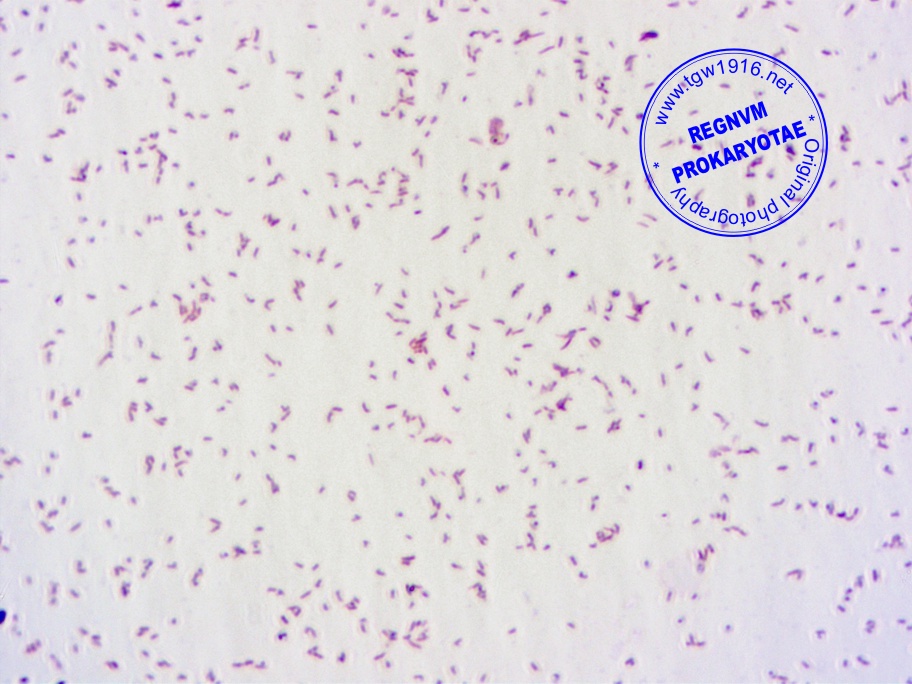
| A. hydrophila Gram-stained cells |
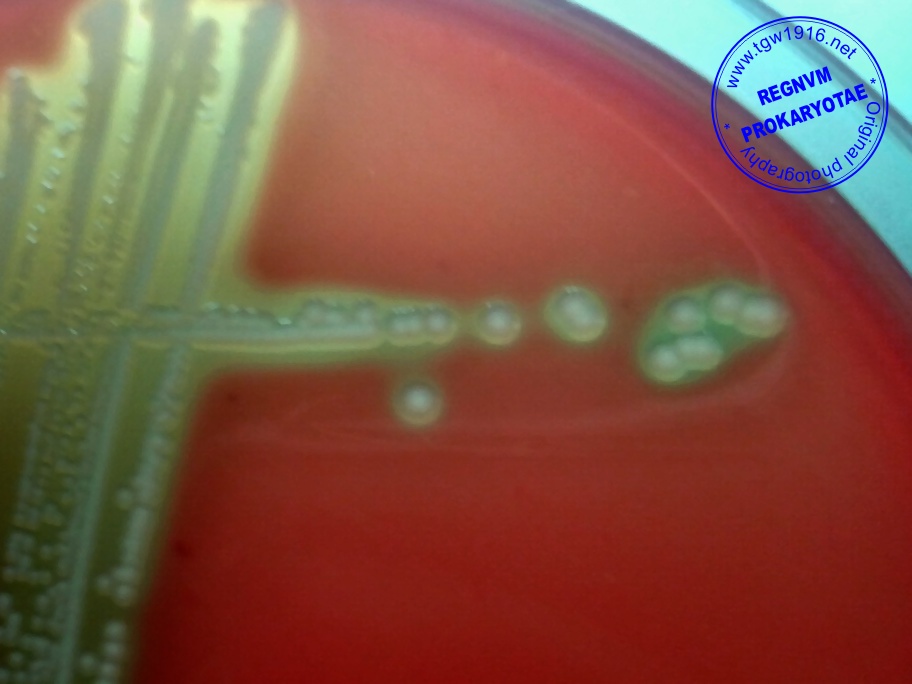
| A. hydrophila hemolytic colonies on Sheep Blood Agar |
Taxonomy
Morphology
Cultural characteristics
Biochemical characters
Ecology
Pathogenicity
References
Phylum Pseudomonadota (Proteobacteria), Class Gammaproteobacteria, Order Aeromonadales, Family Aeromonadaceae, Genus
Aeromonas, Aeromonas hydrophila (Chester 1901) Stanier 1943. Type species of the genus.
Old synonyms: Bacillus hydrophilus fuscus Sanarelli 1871, Bacillus hydrophilus Chester 1901, Proteus hydrophilus (Chester 1901)
Bergey et al. 1923, Bacterium hydrophilum (Chester 1901) Weldin and Levine 1923, Pseudomonas hydrophila (Chester 1901) Breed
et al. 1948.
Species was divided in subspecies:
- Aeromonas hydrophila subsp. dhakensis Huys et al. 2002,
- Aeromonas hydrophila subsp. hydrophila (Chester 1901) Schubert 1969,
- Aeromonas hydrophila subsp. ranae Huys et al. 2003.
According to Martinez-Murcia et al. 2009, strains of Aeromonas hydrophila subsp.
dhakensis belong to the species Aeromonas aquariorum.
Aeromonas, Aeromonas hydrophila (Chester 1901) Stanier 1943. Type species of the genus.
Old synonyms: Bacillus hydrophilus fuscus Sanarelli 1871, Bacillus hydrophilus Chester 1901, Proteus hydrophilus (Chester 1901)
Bergey et al. 1923, Bacterium hydrophilum (Chester 1901) Weldin and Levine 1923, Pseudomonas hydrophila (Chester 1901) Breed
et al. 1948.
Species was divided in subspecies:
- Aeromonas hydrophila subsp. dhakensis Huys et al. 2002,
- Aeromonas hydrophila subsp. hydrophila (Chester 1901) Schubert 1969,
- Aeromonas hydrophila subsp. ranae Huys et al. 2003.
According to Martinez-Murcia et al. 2009, strains of Aeromonas hydrophila subsp.
dhakensis belong to the species Aeromonas aquariorum.
Gram-negative, straight rods with rounded ends, sometimes coccobacilli, 0.3-1.0 x
1.0-3.5 µm. Motile by a single polar flagellum. The presence of a polysaccharide
capsule has been reported in serogroups O:11 and O:34.
1.0-3.5 µm. Motile by a single polar flagellum. The presence of a polysaccharide
capsule has been reported in serogroups O:11 and O:34.
Colonies are smooth, circular, convex, translucent, 1-3 mm in diameter. No brown,
water-soluble pigment is produced on TSA medium. Beta-hemolytic on sheep blood
agar. Mesophilic, growth temperature 10-42 ºC, optimum 28 ºC. Can grow in nutrient
broth with: 0 to 4% NaCl. No growth in 6.5% NaCl. Can grow at pH 4.5-9.
water-soluble pigment is produced on TSA medium. Beta-hemolytic on sheep blood
agar. Mesophilic, growth temperature 10-42 ºC, optimum 28 ºC. Can grow in nutrient
broth with: 0 to 4% NaCl. No growth in 6.5% NaCl. Can grow at pH 4.5-9.
Isolated from humans, animals, fish and fresh water. Resistant to the vibriostatic
agent O129.
agent O129.
A. hydrophila subsp. hydrophila causes infections in poikilotherms, homeotherms
and man. Pathogenicity factors: hemolysins, enterotoxins, cytotoxins, proteases, and
attachment factors. In addition, some strains produce 'aerolysin', an extracellular
protein that is hydrophilic, endowed with both hemolytic and cytolytic activity.
Is responsible for hemorrhagic septicemia in fish (formerly referred to as red plague
or red pest) and ulcers that may cover up to 75 percent of the body. The mortality rate
is very high and most severe outbreaks occur during the warming of the water.
Produce septicaemia in snakes and lizards, necrotic stomatitis in turtles, 'black
disease' in shrimps; pneumonia, septicemia, abortions and wounds infections in
horses, cattle and pigs. Cases of diarrhea were observed in horses. Enteritis and
respiratory disorders in birds, more frequently in aquatic birds.
Opportunistic bacteria to humans. May cause enteritis, wound infections (fish / snakes bites), septicaemia, pneumonia after drowning
(rarely), conjunctivitis or corneal ulcers and other various infections.
A. hydrophila subsp. dhakensis was isolated from stool samples of children (under the age of five) suffering from diarrhoea.
Produce a cytotoxin.
A. hydrophila subsp. ranae was isolated from septicaemic farmed frogs in Thailand.
and man. Pathogenicity factors: hemolysins, enterotoxins, cytotoxins, proteases, and
attachment factors. In addition, some strains produce 'aerolysin', an extracellular
protein that is hydrophilic, endowed with both hemolytic and cytolytic activity.
Is responsible for hemorrhagic septicemia in fish (formerly referred to as red plague
or red pest) and ulcers that may cover up to 75 percent of the body. The mortality rate
is very high and most severe outbreaks occur during the warming of the water.
Produce septicaemia in snakes and lizards, necrotic stomatitis in turtles, 'black
disease' in shrimps; pneumonia, septicemia, abortions and wounds infections in
horses, cattle and pigs. Cases of diarrhea were observed in horses. Enteritis and
respiratory disorders in birds, more frequently in aquatic birds.
Opportunistic bacteria to humans. May cause enteritis, wound infections (fish / snakes bites), septicaemia, pneumonia after drowning
(rarely), conjunctivitis or corneal ulcers and other various infections.
A. hydrophila subsp. dhakensis was isolated from stool samples of children (under the age of five) suffering from diarrhoea.
Produce a cytotoxin.
A. hydrophila subsp. ranae was isolated from septicaemic farmed frogs in Thailand.
- Geert Huys, Peter Kämpfer, M John Albert, Inger Kühn, Rik Denys, and Jean Swings. Aeromonas hydrophila subsp. dhakensis
subsp. nov., isolated from children with diarrhoea in Bangladesh, and extended description of Aeromonas hydrophila subsp.
hydrophila (Chester 1901) Stanier 1943 (approved lists 1980). Int J Syst Evol Microbiol May 2002 52:705-712. - Geert Huys, Marianne Pearson, Peter Kämpfer, Rik Denys, Margo Cnockaert, Valerie Inglis, and Jean Swings. Aeromonas
hydrophila subsp. ranae subsp. nov., isolated from septicaemic farmed frogs in Thailand. Int J Syst Evol Microbiol May 2003 53:
885-891. - Stanier (R.Y.): A note on the taxonomy of Proteus hydrophilus. Journal of Bacteriology, 1943, 46, 213-214.
- Amy Martin-Carnahan and Samuel W. Joseph 2004. Order XII. Aeromonadales ord. nov. In: Bergey’s Manual of Systematic
Bacteriology, Second edition,Vol two, part B, George M. Garrity (Editor-in-Chief), pp. 556-587. - Antonio Martinez-Murcia, Arturo Monera, Anabel Alperi, Maria-Jose Figueras, Maria-Jose Saavedra. Phylogenetic Evidence
Suggests That Strains of Aeromonas hydrophila subsp. dhakensis Belong to the Species Aeromonas aquariorum sp. nov. Curr
Microbiol (2009) 58:76–80.
Positive results for catalase, oxidase, nitrate reduction, indole production, ONPG,
acetate utilization, growth on KCN media, Voges-Proskauer test, gelatin hydrolysis,
lysine decarboxylase, arginine dihydrolase, DN-ase, corn oil lipase, H2S (from cysteine
thiosulfate), acid production from: D-glucose (with gas production), maltose, sucrose,
D-trehalose, glycerol, D-mannitol and mannose.
Negative results for urea hydrolysis, malonate utilization, mucate utilization, ornithine decarboxylase, acid production from: D-xylose,
cellobiose, D-raffinose, adonitol, dulcitol, erythritol, inositol, D-sorbitol, melibiose, D-amygdalin and D-arabitol.
Variable results for esculin hydrolysis, citrate utilization, acid production from: L-arabinose, L-rhamnose, lactose, alpha-methyl-D-
glucoside and salicin.
acetate utilization, growth on KCN media, Voges-Proskauer test, gelatin hydrolysis,
lysine decarboxylase, arginine dihydrolase, DN-ase, corn oil lipase, H2S (from cysteine
thiosulfate), acid production from: D-glucose (with gas production), maltose, sucrose,
D-trehalose, glycerol, D-mannitol and mannose.
Negative results for urea hydrolysis, malonate utilization, mucate utilization, ornithine decarboxylase, acid production from: D-xylose,
cellobiose, D-raffinose, adonitol, dulcitol, erythritol, inositol, D-sorbitol, melibiose, D-amygdalin and D-arabitol.
Variable results for esculin hydrolysis, citrate utilization, acid production from: L-arabinose, L-rhamnose, lactose, alpha-methyl-D-
glucoside and salicin.

(c) Costin Stoica

| Antibiogram |
| Encyclopedia |
| Culture media |

| Biochemical tests |
| Stainings |
| Images |
| Movies |
| Articles |
| Identification |
| Software |
| R E G N U M PROKARYOTAE |

|
Differential characters of the Aeromonas hydrophila subspecies:
Legend: + positive > 85%, - negative > 85%

| Back |