
| Corynebacterium amycolatum |
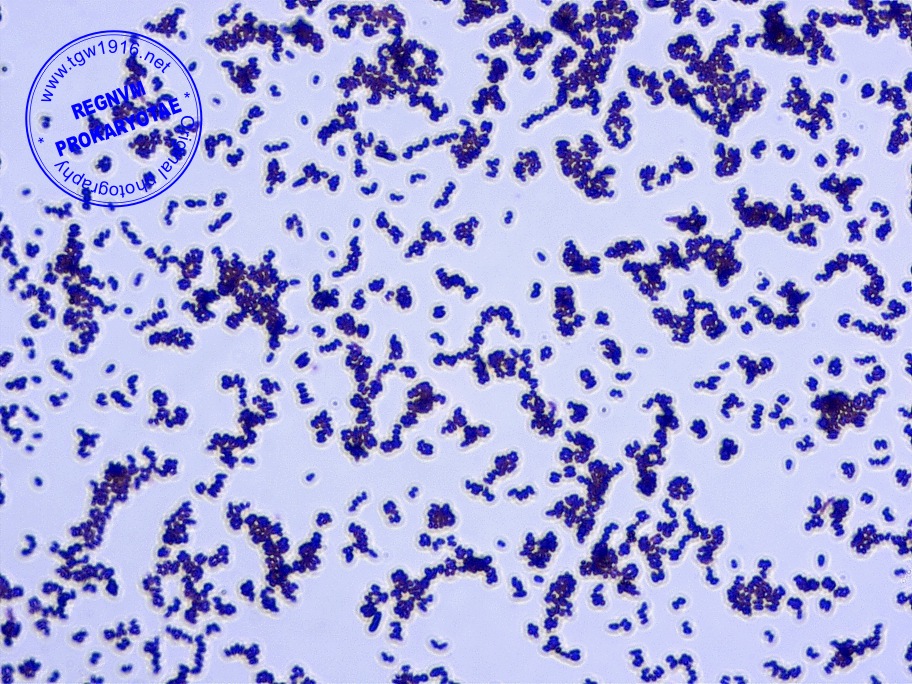
| C. amycolatum, Gram stain |
| C. amycolatum colonies on Sheep Blood Agar |
Taxonomy
Morphology
Cultural characteristics
Biochemical characters
Ecology
Pathogenicity
References
Phylum Actinomycetota, Class Actinomycetes, Order Mycobacteriales, Family
Corynebacteriaceae, Genus Corynebacterium, Corynebacterium amycolatum
Collins, Burton and Jones, 1988.
Historical synonyms: CDC coryneform groups F-2 and I-2.
Corynebacteriaceae, Genus Corynebacterium, Corynebacterium amycolatum
Collins, Burton and Jones, 1988.
Historical synonyms: CDC coryneform groups F-2 and I-2.
Pleomorphic coryneform rods with single cells, V forms or "Chinese letters".
Very typically dry, waxy and grayish white with irregular edges colonies, 1.0-1.5 mm in
diameter after 24 hours of incubation at 37 ºC. CAMP test is negative.
diameter after 24 hours of incubation at 37 ºC. CAMP test is negative.
Isolated from swabs of the skin of healthy people. Isolated from bovine milk (admin
note). Mostly O/129 resistant. May be multiresistant to beta-lactams, macrolides,
clindamycin, aminoglycosides, ciprofloxacin, and rifampin.
Susceptible to glycopeptides and, majority strains to tetracycline.
note). Mostly O/129 resistant. May be multiresistant to beta-lactams, macrolides,
clindamycin, aminoglycosides, ciprofloxacin, and rifampin.
Susceptible to glycopeptides and, majority strains to tetracycline.
A postoperative sternal wound infection, a case of peritonitis associated with a
continuous ambulatory peritoneal dialysis and other opportunistic infections, foreign
body infections, bacteremia, urinary tract infections.
continuous ambulatory peritoneal dialysis and other opportunistic infections, foreign
body infections, bacteremia, urinary tract infections.
- Funke G., von Graevenitz A., Clarridge III J.E., and Bernard K.A., 1997. Clinical Microbiology of Coryneform Bacteria. Clinical
Microbiology Rewiews Vol. 10, No. 1, p. 125-159. - Funke G ., 2006.Corynebacteria and rare coryneforms. In: Topley & Wilson’s Microbiology & Microbial Infections, 10th Edition,
Edited by Borriello S.P., Murray P.R. and Funke G.,Edward Arnold (Publishers) Ltd., Bacteriology, volume 2. - Holt J.G., Krieg N.R., Sneath P.H.A., Staley J.T. and Williams S.T., 1994. Bergey's Manual of Determinative Bacteriology, Ninth
Edition, Williams & Wilkins, A Waverly Company, Baltimore, pp 571-596.
Fermentative metabolism. Non-partially-acid-fast.
Positive results for alkaline phosphatase, reduction of methyl red, pyrazinamidase,
acid production from: fructose, glucose and mannose.
Negative results for casein hydrolysis, esculin hydrolysis, mycolic acids, lipophilism,
tyrosine hydrolysis, acid production from: arabinose, galactose, lactose, mannitol,
raffinose, rhamnose, salicin, starch and xylose.
Variable results for hippurate hydrolysis, nitrate reduction, urease, acid production
from: maltose, sucrose and trehalose.
Positive results for alkaline phosphatase, reduction of methyl red, pyrazinamidase,
acid production from: fructose, glucose and mannose.
Negative results for casein hydrolysis, esculin hydrolysis, mycolic acids, lipophilism,
tyrosine hydrolysis, acid production from: arabinose, galactose, lactose, mannitol,
raffinose, rhamnose, salicin, starch and xylose.
Variable results for hippurate hydrolysis, nitrate reduction, urease, acid production
from: maltose, sucrose and trehalose.
(c) Costin Stoica




| Back |