
| Enterococcus faecium |
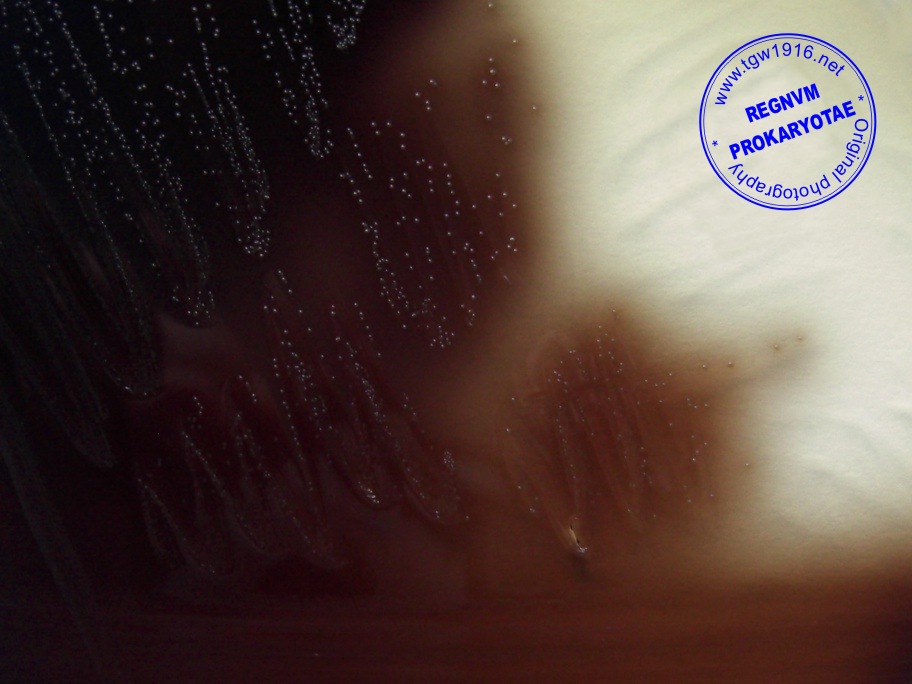
| E. faecium colonies on Bile Esculin Agar. Dark brown halos around colonies due to esculin hydrolysis |
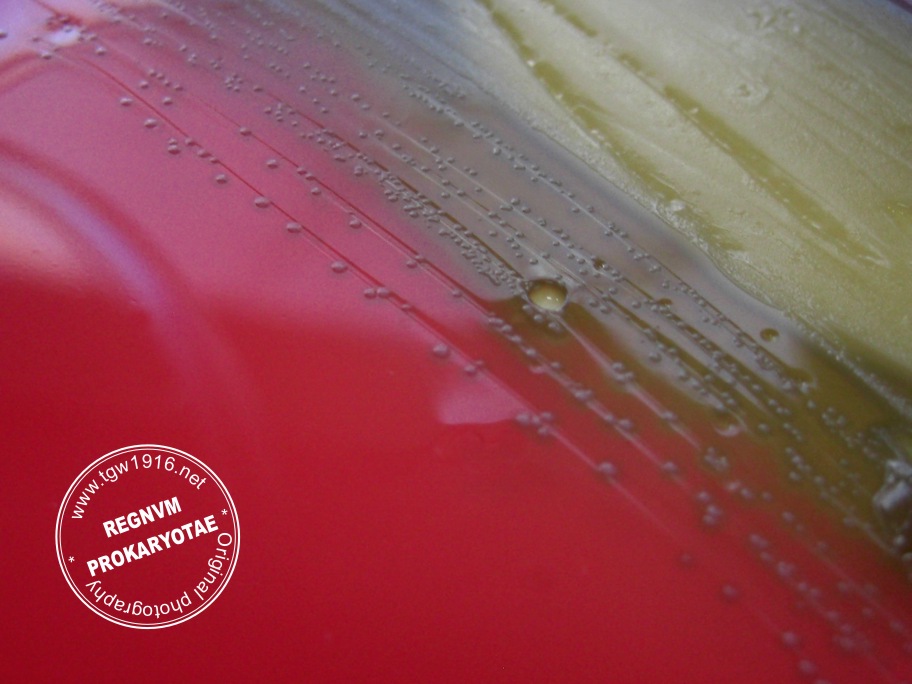
| Enterococcus faecium colonies on Sheep Blood Agar |
Taxonomy
Morphology
Cultural characteristics
Biochemical characters
Ecology
Pathogenicity
References
Phylum Bacillota (Firmicutes), Class Bacilli, Order Lactobacillales, Family Enterococcaceae, Genus Enterococcus, Enterococcus
faecium (Orla-Jensen 1919) Schleifer and Kilpper-Balz 1984.
Lancefield group D.
Basonym: Streptococcus faecium Orla-Jensen 1919.
faecium (Orla-Jensen 1919) Schleifer and Kilpper-Balz 1984.
Lancefield group D.
Basonym: Streptococcus faecium Orla-Jensen 1919.
Gram-positive, ovoid cells, elongated in the direction of the chain, grouped in pairs or
short chains. Some strains are motile.
short chains. Some strains are motile.
Colonies on blood agar or nutrient agar are circular, smooth, and entire. Non-
pigmented. Some strains may produce an alpha-hemolysis.
Strains grow at 10 and 50 ºC, survive heating at 60 ºC for 30 min, and grow in 6.5%
NaCl at pH 9.6.
pigmented. Some strains may produce an alpha-hemolysis.
Strains grow at 10 and 50 ºC, survive heating at 60 ºC for 30 min, and grow in 6.5%
NaCl at pH 9.6.
Isolated from feces and gastrointestinal tract of humans and animals, from plants
(more often from flowers than from buds or leaves), foods, soil and contaminated
waters.
Can contaminate carcasses, milk and dairy products during processing.
(more often from flowers than from buds or leaves), foods, soil and contaminated
waters.
Can contaminate carcasses, milk and dairy products during processing.
Normal inhabitant of the human and animal intestine.
May produce nosocomial infections.
May produce nosocomial infections.
- Pavel Svec and Luc A. Devriese, 2009: Genus I. Enterococcus (ex Thiercelin
and Jouhaud 1903) Schleifer and Kilpper-Bälz 1984, 32VP in Bergey’s Manual
of Systematic Bacteriology, Second Edition, Volume Three, Vos, P.D.; Garrity,
G.; Jones, D.; Krieg, N.R.; Ludwig, W.; Rainey, F.A.; Schleifer, K.-H.; Whitman,
W.B. (Eds.), pp 594-606. - Karl H. Schleifer and Renate Kilpper-Balz. Transfer of Streptococcus faecalis
and Streptococcus faecium to the Genus Enterococcus nom. rev. as
Enterococcus faecalis comb. nov. and Enterococcus faecium comb. nov. Int J
Syst Bacteriol January 1984 34:31-34; doi:10.1099/00207713-34-1-31.
Positive results for arginine dehydrolase, pyrrolidonyl arylamidase, acetoin production,
leucine arylamidase, aesculin hydrolysis, acid production from: amygdalin, arbutin,
cellobiose, D-fructose, galactose, D-glucose, glycerol (aerobically), D-mannose,
N-acetylglucosamine, lactose, maltose, beta-gentiobiose, ribose, salicin, and trehalose.
Negative results for alkaline phosphatase, starch hydrolysis, alpha-galactosidase*,
beta-glucuronidase, acid production from: from adonitol, D- and L-arabitol, dulcitol,
erythritol,D- and L-fucose, glycogen, inositol, 2- and 5-ketogluconate, D-lyxose,
alpha-methyl-D-glucoside, melezitose, D-raffinose, L-sorbose, sorbitol, starch*,
D-tagatose, D-turanose, alpha-methyl-xyloside, xylitol, D- and L-xylose,.
Pyruvate, citrate, malate and serine are not utilized.
Variable results for hydrolysis of hippurate, acid production from: sucrose, rhamnose,
arabinose, raffinose, sorbitol, and mannitol.
* some reference strains are positive (admin note).
leucine arylamidase, aesculin hydrolysis, acid production from: amygdalin, arbutin,
cellobiose, D-fructose, galactose, D-glucose, glycerol (aerobically), D-mannose,
N-acetylglucosamine, lactose, maltose, beta-gentiobiose, ribose, salicin, and trehalose.
Negative results for alkaline phosphatase, starch hydrolysis, alpha-galactosidase*,
beta-glucuronidase, acid production from: from adonitol, D- and L-arabitol, dulcitol,
erythritol,D- and L-fucose, glycogen, inositol, 2- and 5-ketogluconate, D-lyxose,
alpha-methyl-D-glucoside, melezitose, D-raffinose, L-sorbose, sorbitol, starch*,
D-tagatose, D-turanose, alpha-methyl-xyloside, xylitol, D- and L-xylose,.
Pyruvate, citrate, malate and serine are not utilized.
Variable results for hydrolysis of hippurate, acid production from: sucrose, rhamnose,
arabinose, raffinose, sorbitol, and mannitol.
* some reference strains are positive (admin note).
(c) Costin Stoica


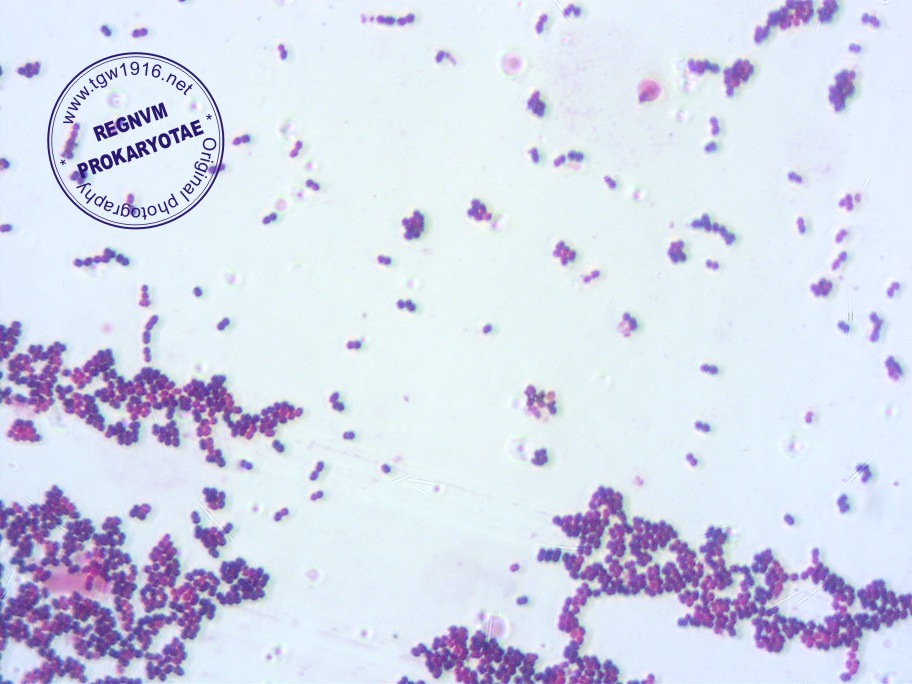
| E. faecium Gram-stained cells |

| Back |