
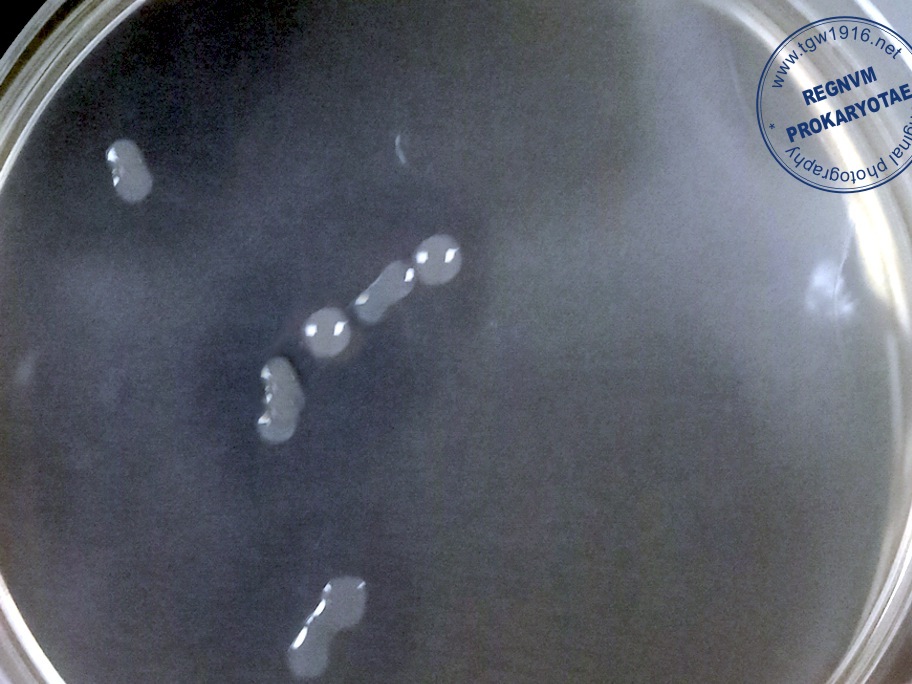
| Calcium carbonate solubilization by A. chroococcum on Ashby's Mannitol Agar: clear halos around colonies. (7 days old culture) |
Admin notes (unpublished data)
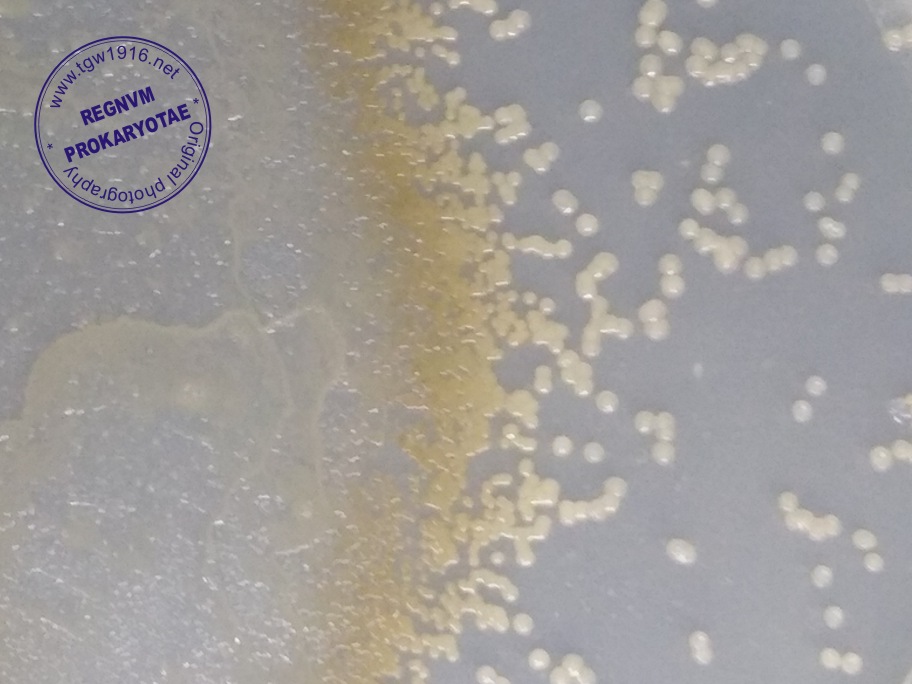
When testing A. chroococcum Bejerinck 1901 ATCC 9043 strain, colonies on Ashby
agar are round, slightly confluent and brown-pigmented after 5 days incubation at 28
ºC. The strain does not grow or the growth is heavily inhibited on MacConkey agar.
Grows well on 5% sheep blood agar without haemolysis production.
On API 20 E and API 20 NE (bioMerieux) kits the type strain was positive for esculin
hydrolysis (after 24h incubation), gelatin hydrolysis (after 5 days) and urea hydrolysis
(after 5 days on API 20 NE and 10 days on API 20 E); all the other test were negative.
Using a 0.5 MacFarland inoculum for the API 20 NE tests, positive results were
obtained for the utilization of glucose, L-arabinose, mannitol, maltose, gluconate,
malate, doubtful results for mannose, N-acetylglucosamine, and negative results for
caprate, adipate, citrate and phenylacetate. Citrate utilization was also negative on
Simmon's medium after 10 days incubation.
When testing A. chroococcum Bejerinck 1901 ATCC 9043 strain, colonies on Ashby
agar are round, slightly confluent and brown-pigmented after 5 days incubation at 28
ºC. The strain does not grow or the growth is heavily inhibited on MacConkey agar.
Grows well on 5% sheep blood agar without haemolysis production.
On API 20 E and API 20 NE (bioMerieux) kits the type strain was positive for esculin
hydrolysis (after 24h incubation), gelatin hydrolysis (after 5 days) and urea hydrolysis
(after 5 days on API 20 NE and 10 days on API 20 E); all the other test were negative.
Using a 0.5 MacFarland inoculum for the API 20 NE tests, positive results were
obtained for the utilization of glucose, L-arabinose, mannitol, maltose, gluconate,
malate, doubtful results for mannose, N-acetylglucosamine, and negative results for
caprate, adipate, citrate and phenylacetate. Citrate utilization was also negative on
Simmon's medium after 10 days incubation.
| Azotobacter chroococcum white, confluent colonies on Ashby medium (right) and brown-pigmentation after 3 days incubation (left-center) |
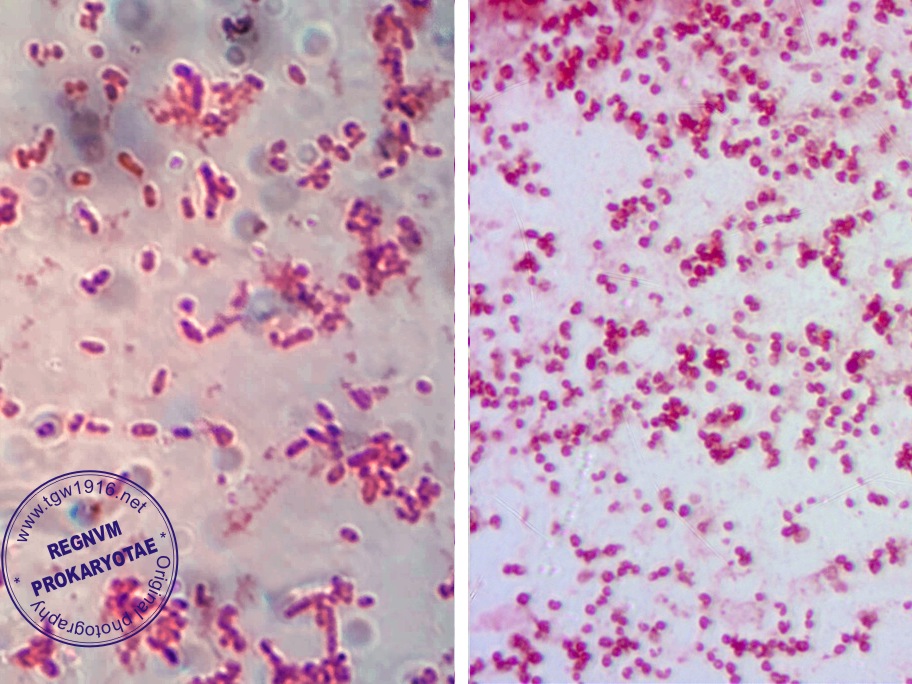
| Azotobacter chroococcum vegetative cells (left) and cysts (right) |
| Azotobacter chroococcum |
Taxonomy
Morphology
Cultural characteristics
Biochemical characters
Ecology
Pathogenicity
References
Phylum Pseudomonadota (Proteobacteria), Class Gammaproteobacteria, Order Pseudomonadales, Family Pseudomonadaceae,
Genus Azotobacter, Azotobacter chroococcum Beijerinck 1901, type species of the genus, 2 subspecies:
-Azotobacter chroococcum subsp. chroococcum (Beijerinck 1901) Jin et al. 2020,
-Azotobacter chroococcum subsp. isscasi Jin et al. 2020.
Genus Azotobacter, Azotobacter chroococcum Beijerinck 1901, type species of the genus, 2 subspecies:
-Azotobacter chroococcum subsp. chroococcum (Beijerinck 1901) Jin et al. 2020,
-Azotobacter chroococcum subsp. isscasi Jin et al. 2020.
Gram-negative, blunt rod to ellipsoid form, 1.5-3 µm in diameter and 3-5 µm in length,
occuring singly, in pairs or irregular clumps. Motile by peritrichous flagella. Cysts are
formed in old cultures or after addition of isopropanol. During encystment, there is a
cessation of most metabolic activities; cysts are simply resting vegetative cells and
are not analogous to bacterial spores. Poly-beta-hydroxybutyrate is accumulated. The
accumulation of PHB granule in cells depends on the content of carbon sources in
the medium culture (best results with ethanol).
occuring singly, in pairs or irregular clumps. Motile by peritrichous flagella. Cysts are
formed in old cultures or after addition of isopropanol. During encystment, there is a
cessation of most metabolic activities; cysts are simply resting vegetative cells and
are not analogous to bacterial spores. Poly-beta-hydroxybutyrate is accumulated. The
accumulation of PHB granule in cells depends on the content of carbon sources in
the medium culture (best results with ethanol).
Colonies are opaque and convex, usually mucoid, glistening and smooth. A brown-black non-diffusible pigment is produced in aging
colonies. Colony size varies with the quantity of produced extracellular polysaccharide. Growth occurs at 20, 28 and 37 ºC, but not at
10 and 45 ºC. Cells grow in Brown’s N-free medium supplemented with 0-0.5% NaCl, and at pH 6.5-10. Aerobic. Nitrogen fixation
occurs at pH 5.5-10 (optimally at pH 7.0-7.5). Molybdate (or vanadate) is required for nitrogen fixation.
Subsp. chroococcum can grow in Luria-Bertani medium (aerobically and at 28 ºC), while subsp. isscasi cannot.
colonies. Colony size varies with the quantity of produced extracellular polysaccharide. Growth occurs at 20, 28 and 37 ºC, but not at
10 and 45 ºC. Cells grow in Brown’s N-free medium supplemented with 0-0.5% NaCl, and at pH 6.5-10. Aerobic. Nitrogen fixation
occurs at pH 5.5-10 (optimally at pH 7.0-7.5). Molybdate (or vanadate) is required for nitrogen fixation.
Subsp. chroococcum can grow in Luria-Bertani medium (aerobically and at 28 ºC), while subsp. isscasi cannot.
Nitrogen-fixing bacteria. N2 fixation uses Mo-, V-, or Fe-containing nitrogenase enzymes, depending on the environmental metal supply.
Subsp. chroococcum was isolated from soil in Germany.
Subsp. isscasi was isolated from paddy soil in Yanting County, PR China.
Subsp. chroococcum was isolated from soil in Germany.
Subsp. isscasi was isolated from paddy soil in Yanting County, PR China.
Considered to be non-pathogenic.
- George M. Garrity, Julia A. Bell & Timothy Lilburn: Order IX Pseudomonadales Orla-Jensen 1921 In: Bergey’s Manual of
Systematic Bacteriology, Second edition,Vol two, part B, George M. Garrity (Editor-in-Chief), 2005, pp. 323-442. - John G. Holt, Noel R. Krieg, Petere H.A. Sneath, James T. Staley, Stanley T. Williams, 1994. Bergey's Manual of Determinative
Bacteriology, Ninth edition. Genus Azotobacter, 77. - Jin H, Wang H, Zhang Y, Hu T, Lin Z, Liu B, Ma J, Wang X, Liu Q, Lin X, et al. Description of Azotobacter chroococcum subsp.
isscasi subsp. nov. isolated from paddy soil and establishment of Azotobacter chroococcum subsp. chroococcum subsp. nov. Int
J Syst Evol Microbiol 2020; 70:2124-2131. - Liu L, Yuan T, An Q, Yang M, Mao X, Mo C, Tan Z, Peng G. Azotobacter bryophylli sp. nov., isolated from the succulent plant
Bryophyllum pinnatum. Int J Syst Evol Microbiol 2019; 69:1986-1992. - Ahmed A. Haroun and Marwa S. Abdel-Hamid. Evaluation and characterization of polyhydroxybutyrate produced by Azotobacter
chroococcum. BTAIJ, 11(9), 2015 [347-354].
Positive results for catalase, citrate utilization, nitrite reduction to N2O, oxidase, starch
hydrolysis, urease, acid production from amygdalin, arabinose, inositol, melibiose,
sorbitol, and sucrose.
Can utilize acetate, acetyl methylcarbinol, L-alaninamide, n-butyrate,
beta-hydroxy-D,L-butyric acid, 1-butanol, caproate, cellobiose, dextrin, D-fructose,
fumarate, glycogen, glucose, alpha-D-glucose, DL-gluconate, glucuronamide,
alpha-ketoglutaric acid, DL-lactate, malonate, maltose, mannitol, malate,
alpha-oxoglutarate, pectin, pyruvate, quinic acid, raffinose, L-serine, sorbitol, sucrose,
succinate, turanose, thymidine, Tween 80, trehalose, and xylitol.
Negative results for gelatinase, nitrate reduction to nitrites, acid production from
glucose and mannitol.
No utilization of adonitol, gamma-amino-butryric acid, cis-aconitic acid, L-arginine, D-
and L-alanine, L-asparagine, L-aspartic acid, L-alanil glycine, 2,3 butanediol,
gamma-aminobutyric acid, bromosuccinic acid, alpha-cyclodextrin, caprylate,
DL-carnitine, citric acid, i-erythritol, 2-aminoethanol, formic acid, fucose,
glycyl-L-proline, D-galactose, gentibiose, alpha- and beta-methyl-D-glucoside,
glutarate, glycolate, N-acetyl-D-galactosamine, N-acetyl-D-glucosamine,
alpha-D-glucose-1-phosphate, D-glucose-6-phosphate, DL-alpha-glycerol
phosphate, L-glutamic acid, L-histidine, itaconic acid, inosine, alpha-keto-butyric acid,
lactose, L-leucine, mannose, D-lactic acid methyl ester, L-ornithine, L-phenylalanine,
L-proline, L-pyroglutamic acid, putrescine, D-psicose, phenol, phenylacetic acid,
phenyl ethylamine, L-rhamnose, ribose, D-salicin, D-serine, D-saccharic acid,
sebacic acid, succinamic acid, Tween 40, L-threonine, urocanic acid, uridine,
alpha-keto-valeric acid, and xylose.
Variable or contradictory results for peroxidase and H2S production, utilization of
L-arabinose, D-arabitol, benzoate, glycerol, DL-beta-hydroxybutyrate, m-inositol,
D-melibiose, propionate, beta-phenylpropionate, and 1-propanol.
Subsp. isscasi can be differentiated from subsp. chroococcum by not growing in
Luria-Bertani medium, vancomycin susceptibility, and no utilization of D-galacturonic
acid, D-glucuronic acid, glucuronamide and stachyose (Biolog GEN III).
hydrolysis, urease, acid production from amygdalin, arabinose, inositol, melibiose,
sorbitol, and sucrose.
Can utilize acetate, acetyl methylcarbinol, L-alaninamide, n-butyrate,
beta-hydroxy-D,L-butyric acid, 1-butanol, caproate, cellobiose, dextrin, D-fructose,
fumarate, glycogen, glucose, alpha-D-glucose, DL-gluconate, glucuronamide,
alpha-ketoglutaric acid, DL-lactate, malonate, maltose, mannitol, malate,
alpha-oxoglutarate, pectin, pyruvate, quinic acid, raffinose, L-serine, sorbitol, sucrose,
succinate, turanose, thymidine, Tween 80, trehalose, and xylitol.
Negative results for gelatinase, nitrate reduction to nitrites, acid production from
glucose and mannitol.
No utilization of adonitol, gamma-amino-butryric acid, cis-aconitic acid, L-arginine, D-
and L-alanine, L-asparagine, L-aspartic acid, L-alanil glycine, 2,3 butanediol,
gamma-aminobutyric acid, bromosuccinic acid, alpha-cyclodextrin, caprylate,
DL-carnitine, citric acid, i-erythritol, 2-aminoethanol, formic acid, fucose,
glycyl-L-proline, D-galactose, gentibiose, alpha- and beta-methyl-D-glucoside,
glutarate, glycolate, N-acetyl-D-galactosamine, N-acetyl-D-glucosamine,
alpha-D-glucose-1-phosphate, D-glucose-6-phosphate, DL-alpha-glycerol
phosphate, L-glutamic acid, L-histidine, itaconic acid, inosine, alpha-keto-butyric acid,
lactose, L-leucine, mannose, D-lactic acid methyl ester, L-ornithine, L-phenylalanine,
L-proline, L-pyroglutamic acid, putrescine, D-psicose, phenol, phenylacetic acid,
phenyl ethylamine, L-rhamnose, ribose, D-salicin, D-serine, D-saccharic acid,
sebacic acid, succinamic acid, Tween 40, L-threonine, urocanic acid, uridine,
alpha-keto-valeric acid, and xylose.
Variable or contradictory results for peroxidase and H2S production, utilization of
L-arabinose, D-arabitol, benzoate, glycerol, DL-beta-hydroxybutyrate, m-inositol,
D-melibiose, propionate, beta-phenylpropionate, and 1-propanol.
Subsp. isscasi can be differentiated from subsp. chroococcum by not growing in
Luria-Bertani medium, vancomycin susceptibility, and no utilization of D-galacturonic
acid, D-glucuronic acid, glucuronamide and stachyose (Biolog GEN III).

(c) Costin Stoica


| Back |